'Teaching of Reading' sessions (Years 2-6)
Key Stage 2
Language/reading comprehension sessions are taught three times per week (from Year 3 through to Year 6). Each lesson lasts for 30 minutes.
The texts chosen for study during these sessions range widely. They may be short or longer narrative extracts, poems or non-fiction texts relating to another area of the curriculum or special events (such as Armistice Day).
The central purpose for reading in every session is the deriving of meaning from the text under study. Even when the development of fluency is a key focus (as it will be regularly in Years 3-4), gaining meaning is still an essential element of each teaching sequence.
Key Elements of a 'Teaching of Reading' sequence of learning
Planned vocabulary instruction
Integral to our classroom practice are strategies such as:
- Pre-teaching vocabulary
- Discussing word meanings
- Grouping words
- Comparing words
- Finding precise definitions, synonyms and antonyms
- Exploring vocabulary use in varying contexts
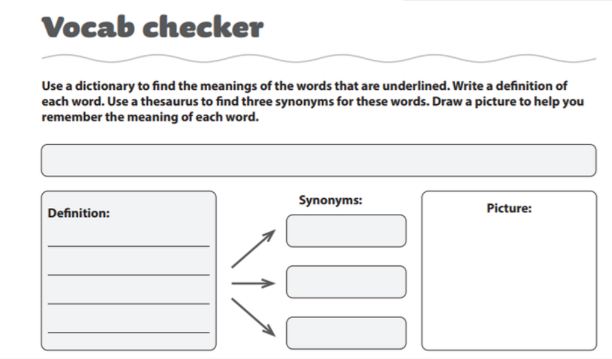
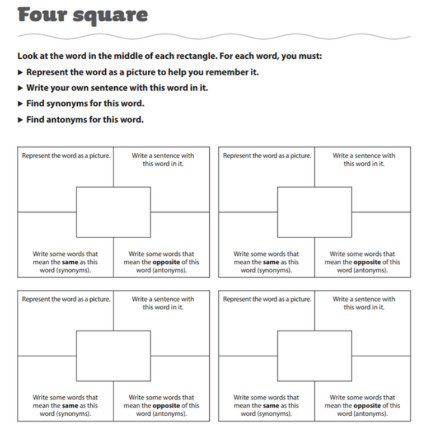
In every sequence, teachers will pre-select challenging vocabulary that the children will come across in the text. The meaning of these words will be explained, discussed or explored prior to a first reading of the text. On occasion, the exploration of related vocabulary may take the form of a short written task, such as one of the activities below (taken from Reading Recharged by Alex Barton) or a frayer model.
Fluency Practice
In this part of the teaching sequence, we have the opportunity to both model and develop fluency and prosody. By varying the reading strategies employed, we can ensure that the energy and engagement in these lessons remains high.
The teacher will model an effective read-through of the text, with pupils following using a 'reading finger' or 'reading ruler' on individual copies. The children are then asked to echo read. This is usually done for a short, carefully identified section of the text.
Paired reading and opportunities for choral reading follow, giving all children time to practise reading the text and applying the taught prosody.
There is then a 'readers' theatre' performance – the section of the text that has been well-rehearsed is performed by a number of individuals or pairs. This gives opportunity for praise and supportive, developmental feedback.
The session closes with some oral comprehension using questions that have been devised by the teacher.
Extended Reading sessions
Developing text understanding through discussion and planned questioning
Instead of focusing on reading comprehension skills at the Whiteoak Academies, we focus on the comprehension strategies that good readers employ. The EEF diagram below, provides a really useful reminder of these...and guides the discussions we have with children as we read and pause together in longer extracts of text.
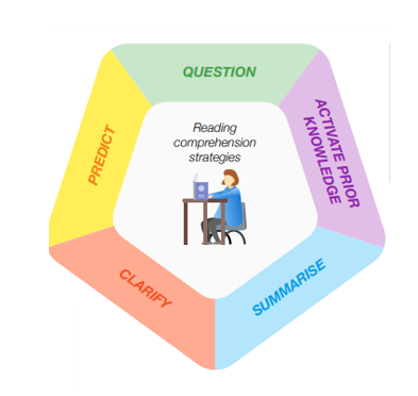
‘Book talk’ is crucial. While we are in the process of reading a text, we mentally construct and update a model of what we have understood from it - widely referred to as a situation model. Doing this collectively in a whole class situation, where the teacher can use metacognitive talk to model what a good reader does in the moment of reading, is really powerful.
Extended reading sessions include the reading of a longer extract (teacher reads with children following or some independent reading dependent upon age) with the interspersing of preplanned pause points for questioning and discussion. While some of these sessions will result in a written outcome, others will remain purely oral.
Close reading sessions
Close reading involves the detailed analysis of a short text or extract. It involves repeated reading of a text whereby the first reading gives an overall sense and subsequent readings involve the discussion of particular themes, vocabulary choices or literary devices employed by the author. It is a more in-depth study than an extended read and there is often a short written outcome in these sessions.